
NSW Ports
Helping NSW Ports Modernise the Gateway to New South Wales
The Challenge
A third of the state’s bulk liquids, the fuel for Sydney among them, moves through infrastructure run by 65 people. The ERP beneath every core process was reaching end of life, and nobody could see the whole application estate well enough to plan its replacement.
The Solution
Six weeks. That was the window NSW Ports set to map the enterprise, test its assumptions and put a fundable case for change in front of the ICT Board. Capability-based planning compressed the estate onto single pages the whole business could argue over.
The Impact
The board backed the case for change and the funding request. Procurement of replacement core systems started within three months. Assumptions the business held about its own applications fell to evidence, and the one-page city plan is now standing governance.
The Challenge
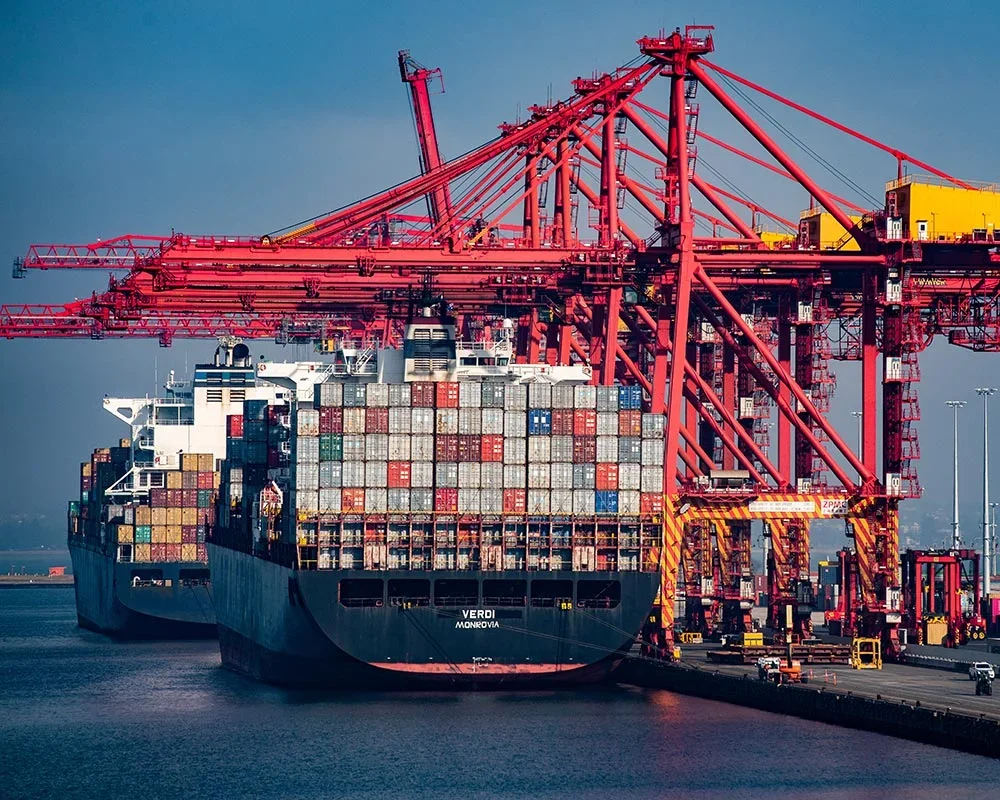
Sydney’s fuel arrives by sea. A third of the bulk liquids entering New South Wales comes through berths NSW Ports manages, alongside the containers and cars that keep the state’s economy moving: $4.4 billion of economic contribution, close to 60,000 jobs, run by 65 people. When COVID stopped anyone boarding a vessel, a paper safety checklist held up the discharge of fuel tankers. The port digitised that process in weeks. The harder question was what else was hiding in the estate.
There was no current picture to consult. IT was largely outsourced, which kept the organisation lean and left IT without the standing to engage the business strategically. The architecture had not been reviewed since the years after privatisation in 2013. Shadow IT had grown in corners of the business, some of it valuable, some of it paying twice for the same capability, and nobody could say which was which. At the centre of it all sat the Enterprise Resource Planning system carrying every core process, reaching end of life.
Replacing an ERP on anecdote is how transformations fail. The board needed evidence: what the business does, which applications carry it, where the pain sits, and where investment would advance the strategy of rail modal shift, digital trade and supply-chain data. NSW Ports gave the work six weeks. The clock and the credibility of the funding request started together.
The Solution
Six weeks rules out a conventional review, so the method had to compress. Every workshop opened with a ten-minute framing the client still quotes: the city plan for the port, what enterprise architecture is, and what fixing it would mean for the person in the room. That framing turned sceptics into contributors, and their evidence redrew the map. Applications the executive held firm views about turned out to need different treatment entirely; the process was built to course-correct, and it did.
The analysis put the whole enterprise on single pages. A Business Motivation Model traced every candidate investment back to strategic intent. A Business Capability Model showed what the business does, in business terms. A health and lifecycle assessment scored the application portfolio, and interaction diagrams exposed the dependencies that would make or break an ERP replacement. From there, requirements across Finance, Business Development, Property Management and IT hardened into an objective vendor evaluation tool, and dozens of market options became a defensible shortlist. Analysis, case for change and funding request reached the ICT Board inside the window.
“FromHereOn were able to give us, in simple one-page graphical snapshots, a good outcome: the enterprise architecture, the case for change, and what our IT application roadmap should be. The right experience and good individuals delivered that scope and got us to a good value outcome within six weeks.”

The Impact
The board funded the case for change on the strength of pages it could read in minutes.
Together, we worked to:
Put the whole enterprise, capabilities, applications, health and dependencies, on single pages the executive could interrogate and agree on.
Overturn preconceived ideas about priority applications with evidence, before those assumptions could shape a multi-year investment.
Build an objective, replicable ERP vendor assessment covering business, technical, support and budgetary criteria, to the standard a critical infrastructure provider on a significant government lease must meet.
Surface shadow IT across the business and separate the innovation worth keeping from the duplication worth retiring.
Set a roadmap connecting the ERP replacement to the strategy it serves: rail modal shift, digital trade processes and data sharing across the supply chain.
Selection and procurement of replacement core systems began within three months. The deeper change is standing: NSW Ports now refreshes its city plan as governance, so the estate stays visible, and the evaluation tool is there for every decision after this one.
What would your next board conversation look like with the whole application estate on a single page? From here on, the future looks brighter. Get in touch.
The Numbers
$4.4bn
Contributed to the Australian economy each year
60,000
Jobs influenced by the ports NSW Ports manages
6
Weeks from first workshop to a funded case for change